
When I first started learning poker, I focused almost entirely on the cards I was holding. I thought getting a strong hand was all that mattered. But after a few games, I noticed something confusing. I would lose with good cards and sometimes win with average ones, and that made me realize I was missing something important.
That’s when I started paying attention to how betting actually works. I began to see that the way players bet, react, and apply pressure had a bigger impact than the cards themselves. Once I understood that, the game started to make a lot more sense, and I became more confident in my decisions.
What Betting Means In Poker
Before going deeper, it is important to understand what betting actually represents in poker. Betting is not just about putting money into the pot. It is a way of communicating strength, weakness, or intention.
Every time a player bets, they are telling a story. That story could be true or misleading, but it affects how others react.
This is why betting is often more important than the cards themselves. A good bet can win you a hand even if your cards are not the strongest.
How Poker Betting Rounds Work
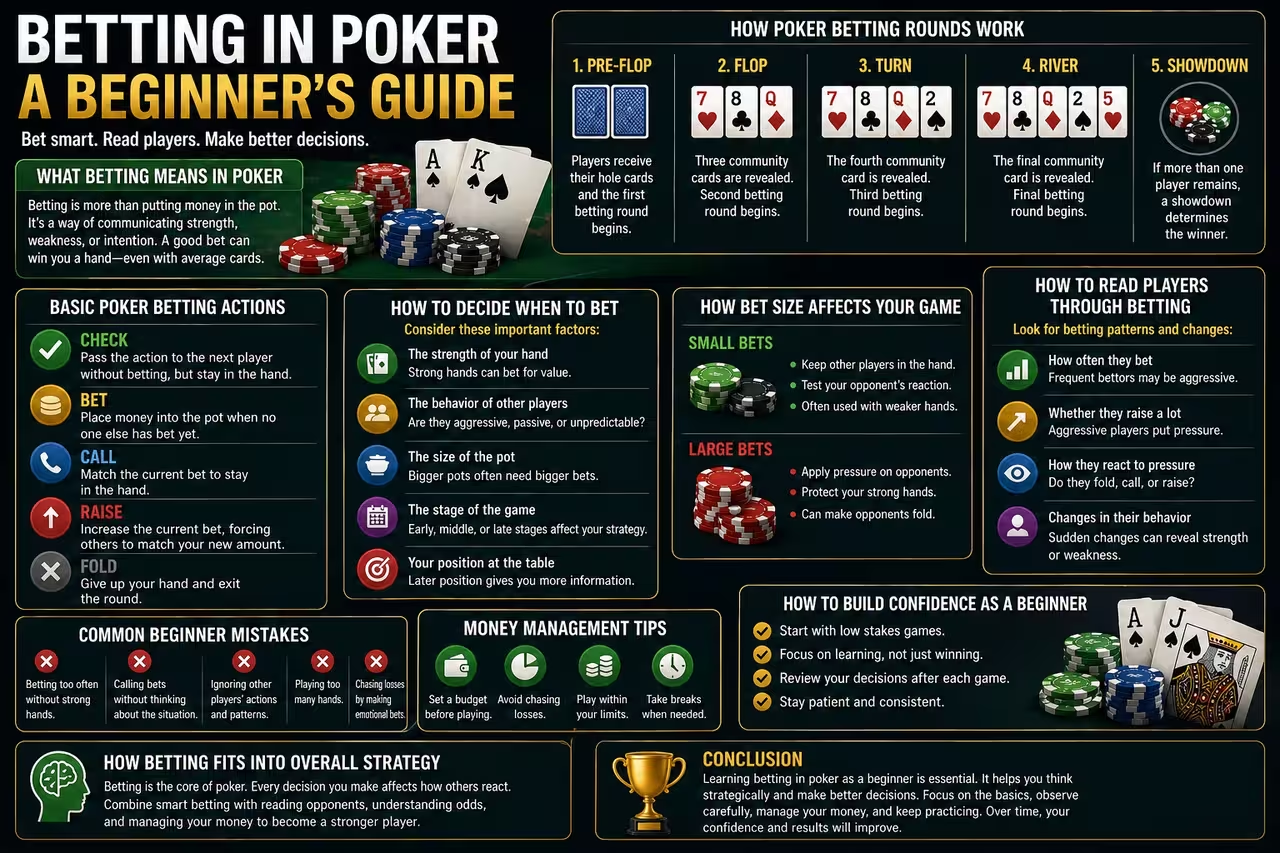
Poker is played in stages, and each stage has its own betting round. Understanding these rounds helps you know when to act and what decisions to make.
Before listing them, remember that each round gives you new information.
Here are the main betting rounds in most poker games:
Pre-flop where players bet after receiving their cards
Flop where the first three community cards are revealed
Turn where the fourth card is revealed
River where the final card is revealed
Each round allows you to adjust your strategy based on what you see.
Basic Poker Betting Actions Explained
As a beginner, it is important to understand the basic actions you can take during a hand. These actions determine how the game progresses.
Before going into each one, keep this in mind. Every action has a purpose, and knowing when to use it is key.
Here are the main betting actions:
Check: This means you pass the action without betting, but you stay in the hand.
Bet: This is when you place money into the pot when no one else has bet yet.
Call: This means you match another player’s bet to stay in the hand.
Raise: This is when you increase the current bet, forcing others to match your new amount.
Fold: This means you give up your hand and exit the round.
Understanding these actions is a core part of learning betting in poker as a beginner.
How To Decide When To Bet In Poker
Knowing what actions are available is one thing, but deciding when to use them is where most beginners struggle.
Betting decisions depend on several factors, not just your cards.
Before listing them, remember that poker is about thinking ahead, not reacting randomly.
Here are key things to consider:
The strength of your hand
The behavior of other players
The size of the pot
The stage of the game
Balancing these factors helps you make better decisions.
How Bet Size Affects Your Game
Betting is not just about whether you bet or not. The size of your bet matters a lot.
A small bet and a large bet can send completely different messages to other players.
Small Bets
Small bets are often used to keep players in the game or test reactions.
Large Bets
Large bets are used to apply pressure or protect a strong hand.
Choosing the right size is part of your overall strategy.
How To Read Other Players Through Betting
One of the most interesting parts of poker is reading other players. Betting patterns can give you clues about what they might have.
Before listing what to look for, remember that no single action tells the full story.
Here are things to observe:
How often a player bets
Whether they raise aggressively
How they react to pressure
Changes in their betting behavior
These patterns help you make better decisions.
Common Beginner Mistakes In Poker Betting
When starting out, it is easy to make mistakes. Most of them come from misunderstanding how betting works.
Before listing them, remember that learning from mistakes is part of improving.
Here are common mistakes:
Betting too often without strong hands
Calling bets without thinking
Ignoring other players’ actions
Playing too many hands
Avoiding these helps you improve faster.
How To Manage Your Money While Playing Poker
Poker involves real money, so managing it properly is important. Many beginners focus only on winning hands and ignore this part.
Before listing what to do, remember that control is key.
Here are simple rules:
Set a budget before playing
Avoid chasing losses
Play within your limits
Take breaks when needed
This helps you stay in control.
How To Build Confidence As A Beginner
Poker can feel overwhelming at first, especially when you are still learning how betting works. The key is to take things step by step.
Before listing how to improve, remember that progress takes time.
Here are ways to build confidence:
Start with low stakes games
Focus on learning, not just winning
Review your decisions after each game
Stay patient and consistent
This helps you develop your skills gradually.
How Betting Fits Into Overall Poker Strategy
Betting is not a separate part of poker. It is the core of the game. Every decision you make is connected to how you bet and how others respond.
As you gain experience, you will start to combine betting with strategy, reading opponents, and understanding probabilities.
This is what makes poker both challenging and rewarding.
Conclusion
Understanding betting in poker as a beginner is one of the most important steps in learning the game. It helps you move beyond relying on cards and start thinking strategically.
Focus on learning the basics, understanding betting rounds, and making thoughtful decisions. Avoid rushing and take time to observe how others play.
With practice and patience, betting will become more natural, and your confidence at the table will grow.
0 Comments
Comments are reviewed before they appear.No comments yet. Be the first to add one.