
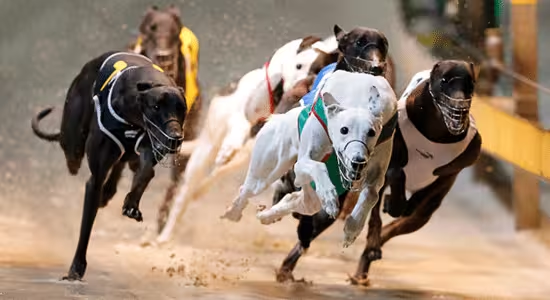
Dog racing betting may seem simple at first glance, but many beginners quickly discover that picking winners consistently is much harder than it looks. With races often lasting less than 30 seconds, there is little room for error, and many bettors rely on instinct rather than data. This approach usually leads to inconsistent results and unnecessary losses.
The good news is that successful dog racing betting is not about luck alone. By learning how to read form guides, understand box draws, analyze track conditions, and identify value in betting markets, you can make far more informed decisions. This guide explains the fundamentals of greyhound betting and shows you how to approach races with a structured, data-driven mindset.
Understanding How Dog Racing Betting Works
Dog racing betting revolves around predicting how greyhounds will perform in a race based on form, speed, running style, and race conditions. Unlike many other sports, greyhound races are extremely short, meaning small advantages can have a major impact on the outcome.
Most races feature six to eight runners, each assigned a starting box. The objective is usually straightforward: select the greyhound most likely to win or finish in a particular position. However, the simplicity of the concept often hides the complexity of the analysis required.
Successful bettors understand that every race is influenced by multiple factors. A greyhound's recent performance, preferred running line, starting box, and track suitability all contribute to its chances of success.
Why Form Guides Matter
The form guide is the most important tool available to dog racing bettors. It contains historical performance data that helps you evaluate how each greyhound is likely to perform under current race conditions.
Many beginners make the mistake of looking only at recent finishing positions. While wins and losses are important, they do not tell the whole story. A greyhound that finished fourth may actually have run a better race than a dog that finished second, depending on race circumstances.
The key is understanding what the data is actually telling you. Form guides provide context, allowing you to move beyond simple results and focus on performance quality.
How to Read a Greyhound Form Guide
A greyhound form guide contains far more information than most new bettors realise. Learning how to interpret these details correctly can dramatically improve your race analysis.
Important areas to review include:
- Recent finishing positions
- Race times
- Sectional times
- Track records
- Distance performance
- Starting box history
Each metric contributes a different piece of information. Together, they help create a clearer picture of a dog's strengths, weaknesses, and suitability for the upcoming race.
The more comfortable you become with form guides, the easier it becomes to identify runners that may be underrated by the market.
Understanding Race Times and Sectional Splits
Race times provide a general measure of how quickly a greyhound completed a race. However, sectional times often provide even greater insight because they reveal how a dog performed during specific stages of the event.
Early sectionals are particularly important because they show how quickly a greyhound leaves the boxes and establishes position. In many races, securing a favourable position early can determine the outcome.
A dog with consistently fast sectionals may be more dangerous than its finishing positions suggest. Even if it has not been winning regularly, strong early speed can create opportunities under the right conditions.
Why Box Draw Is So Important
The starting box is one of the most influential factors in greyhound racing. Different dogs have different running styles, and the box draw can either enhance or hinder those tendencies.
Some greyhounds prefer running close to the rail and perform best from inside boxes. Others naturally move wide after the start and may benefit from an outside draw. Understanding these preferences is essential when evaluating race setups.
Ignoring the box draw is one of the most common mistakes beginners make. Even a highly talented greyhound can struggle if its preferred running path is blocked by neighbouring runners.
Analyzing Box Draw Statistics
Most form guides include historical data showing how a greyhound performs from specific box numbers. This information can reveal patterns that are not immediately obvious from overall results.
For example, a dog may have a strong record from Box 1 but struggle from wider positions. Another runner may consistently perform well regardless of its draw, indicating greater adaptability.
These trends help bettors assess whether a greyhound is likely to enjoy favourable race conditions. When combined with running style analysis, box statistics become a powerful predictive tool.
The Impact of Track Conditions
Track conditions play a significant role in dog racing outcomes. Different surfaces and weather conditions can favour certain types of greyhounds while disadvantaging others.
A fast, dry track may benefit early speed dogs that like to lead from the front. A wetter or slower surface may favour stronger finishers capable of maintaining momentum through difficult conditions.
Understanding how individual greyhounds perform under varying conditions can create valuable betting opportunities. Many bettors focus exclusively on form while overlooking environmental factors that can significantly influence results.
Evaluating Track and Distance Suitability
Not every greyhound performs equally well at every track or distance. Some dogs excel over short sprint distances, while others perform better in longer races that reward stamina.
Similarly, certain tracks suit particular running styles. A greyhound that performs well on one circuit may struggle at another due to differences in layout, turns, or surface characteristics.
Reviewing historical results at the same track and distance provides valuable insight into how likely a dog is to reproduce its best form. This information often proves more reliable than general career statistics.
Understanding Trainer Influence
Greyhound trainers have a major impact on performance. Successful trainers consistently prepare dogs well, place them in suitable races, and manage their development effectively.
A kennel experiencing strong recent form often indicates that its dogs are healthy, fit, and performing near their peak. Conversely, a trainer enduring a poor run of results may signal underlying issues.
While trainer form should never be the sole basis for a bet, it provides useful context that can support or challenge your overall assessment of a race.
Common Dog Racing Bet Types
Dog racing offers a variety of betting markets, each with different risk and reward profiles. Understanding these options helps bettors choose wagers that align with their confidence and analysis.
The most common bet types include:
- Win
- Place
- Each-Way
- Quinella
- Exacta
- Trifecta
- First Four
Beginners are usually best served by focusing on win and place betting while developing their analytical skills. More complex exotic bets can be explored once you gain greater confidence and experience.
Exotic markets offer larger payouts but require more accurate predictions, making them inherently more challenging.
Choosing the Right Betting Market
The best betting market depends on the strength of your opinion and the information available. If you strongly believe a greyhound will win, a win bet may provide the greatest value.
If you think a runner is likely to perform well but are less certain about victory, a place bet may offer a safer alternative. Each-way bets combine both approaches and can reduce volatility.
Understanding the strengths and weaknesses of each market allows bettors to match their strategy to the specific race conditions rather than relying on a one-size-fits-all approach.
How to Identify Value Bets
Value betting is one of the most important concepts in dog racing. The goal is not simply to pick winners but to identify situations where the available odds are greater than the true probability of success.
For example, if your analysis suggests a greyhound has a 40% chance of winning but the market prices it as though it has only a 25% chance, there may be value in that selection.
Over time, consistently finding value is more important than achieving a high strike rate. Profitable betting depends on odds and probability working together, not just picking winners.
Building a Simple Greyhound Betting Process
Many successful bettors follow a consistent process before placing any wager. This helps remove emotion from decision-making and improves analytical discipline.
A simple framework might include:
- Review recent form
- Analyze race times
- Check sectional splits
- Evaluate box draw
- Consider track conditions
- Compare available odds
Following the same process for every race creates consistency and reduces the likelihood of overlooking important information.
The objective is not to predict every winner perfectly but to make informed decisions based on available evidence.
Common Mistakes Beginners Make
New bettors often focus too heavily on recent wins while ignoring the context behind those results. A dog that won an easy race may not be as impressive as a runner that finished third against stronger opposition.
Another common mistake is ignoring box draw and track suitability. These factors frequently determine race outcomes, yet many casual bettors pay little attention to them.
Chasing losses is another major issue. Increasing stake sizes after unsuccessful bets usually leads to further problems rather than improved results. Discipline remains essential regardless of short-term outcomes.
Conclusion
Learning how to bet on dog racing successfully requires more than simply selecting the fastest-looking greyhound. Understanding form guides, sectional times, box draws, track conditions, trainer influence, and betting value provides a much stronger foundation for making informed decisions. Each of these factors contributes to a clearer picture of how a race is likely to unfold.
By developing a structured analytical process and combining it with responsible bankroll management, bettors can approach greyhound racing with greater confidence and consistency. While no strategy guarantees success, a disciplined, data-driven approach offers the best chance of finding long-term value and improving overall betting results.
0 Comments
Comments are reviewed before they appear.No comments yet. Be the first to add one.