
I once saw a bettor lose a perfect 5-leg accumulator because he misunderstood one simple thing—goal timing. The match ended 3-0 just as he predicted, but all the goals came in the first half, and his ticket still lost.
That’s the risk with the “Goal in Both Halves” market. It’s not about how many goals are scored—it’s about when they are scored.
If you understand how this market works and where to apply it, it can become a strong tool for finding value.
What Does “Goal in Both Halves” Mean?
Before placing this bet, you need to understand the exact condition required to win.
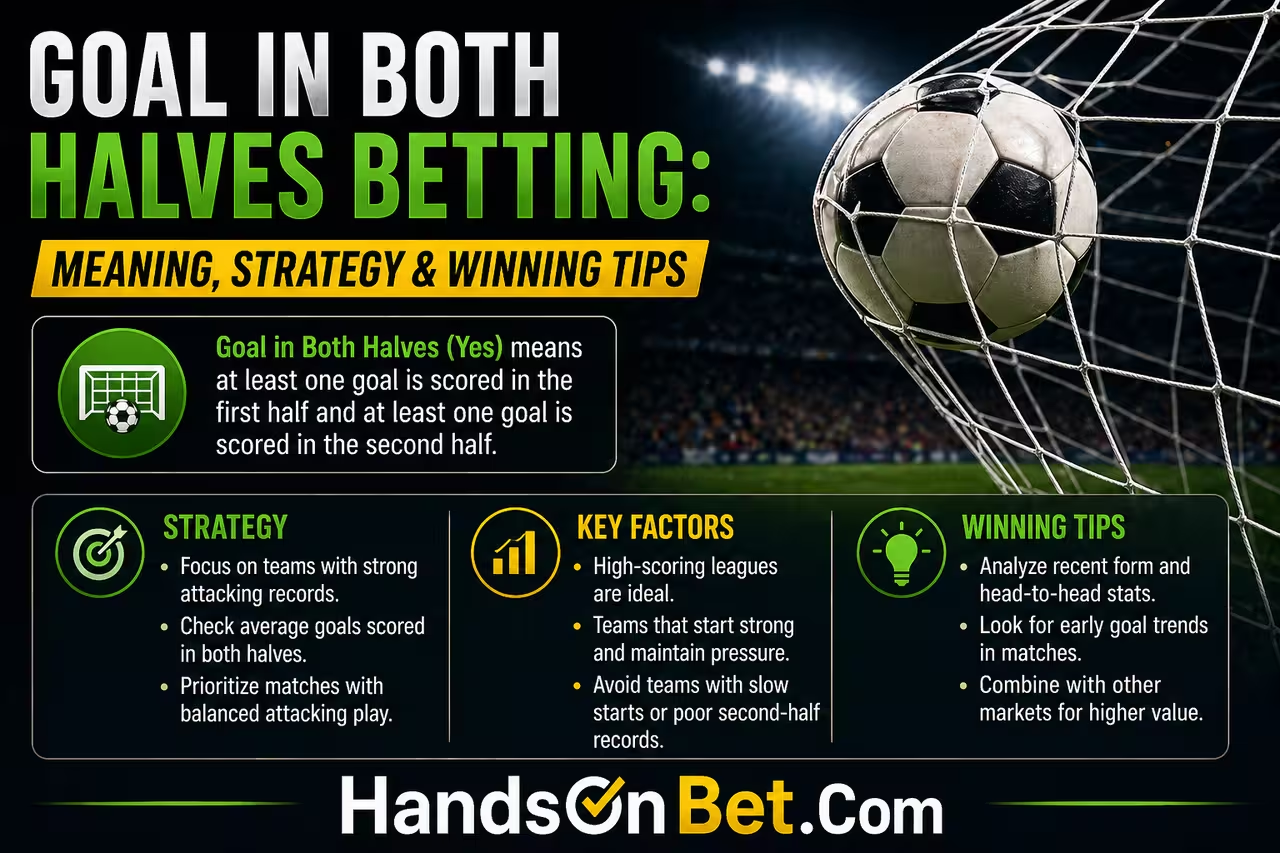
When you select “Yes,” you are predicting that there will be at least one goal in each half of the match.
To break it down clearly:
At least one goal must be scored in the first half
At least one goal must be scored in the second half
It does not matter which team scores
As long as both halves have at least one goal, your bet wins.
Example Scenarios
Understanding this market becomes easier when you look at real scorelines.
Here are examples of how outcomes are settled:
1-1 (one goal in each half) → win
2-1 (goals spread across both halves) → win
2-0 (both goals in first half) → lose
0-2 (both goals in second half) → lose
The timing of the goals is the only thing that matters.
The Common Mistake Bettors Make
Many bettors confuse this market with standard goal markets.
Here is the key difference you need to remember:
Over 1.5 Goals → only cares about total goals
Goal in Both Halves → cares about goal timing
This is why a 2-0 result can win one bet and lose the other.
Why a 2-0 First Half Can Still Lose Your Bet
At first glance, two early goals seem like a safe win.
But here is what actually happens:
First half: 2 goals
Second half: 0 goals
Result → your bet loses
Even though the match had goals, they were not spread across both halves.
Odds Comparison: Is It Worth the Risk?
This market usually offers better odds than simple goal markets.
To understand the difference, compare typical pricing:
Over 1.5 Goals → around 1.25 to 1.35
Goal in Both Halves (Yes) → around 1.55 to 1.70
You are getting higher odds, but you are taking on additional risk.
3 Smart Strategies for “Goal in Both Halves: Yes”
You should not approach this market randomly. A few simple patterns can improve your selection.
Here are the key strategies to focus on:
Target strong attacking teams
Teams that press early and keep attacking late are more likely to score in both halves.Look for squads with depth
Teams with strong substitutes often score again in the second half when fresh players come on.Avoid defensive game management teams
Some teams score early and then sit back. These are risky for this market.
When the “No” Option Is More Valuable
Sometimes the smartest move is to go against goals instead of chasing them.
Here are situations where “No” becomes valuable:
Defensive leagues with frequent 0-0 first halves
Matches expected to be slow and tactical
Teams that struggle to score consistently
In these cases, predicting at least one goalless half can be more reliable.
Using Fatigue to Your Advantage
Match conditions can heavily influence goal timing.
Here is how fatigue affects games:
Teams playing after midweek matches often start slowly
Tired players reduce attacking intensity
First halves in these matches are often low-scoring
This increases the chances of one half finishing without goals.
Best Leagues for “Goal in Both Halves: Yes”
League selection plays a huge role in success with this market.
Here are the types of leagues that work best:
High-scoring leagues with attacking football
Competitions with weak defensive structures
Matches where both teams create chances
These conditions increase the likelihood of goals in both halves.
Leagues to Avoid
Some leagues are not suited for this type of bet.
It is safer to avoid:
Tactical leagues with slow starts
Matches where teams prioritize defense
Competitions with frequent low-scoring games
These environments often produce long periods without goals.
0 Comments
Comments are reviewed before they appear.No comments yet. Be the first to add one.