
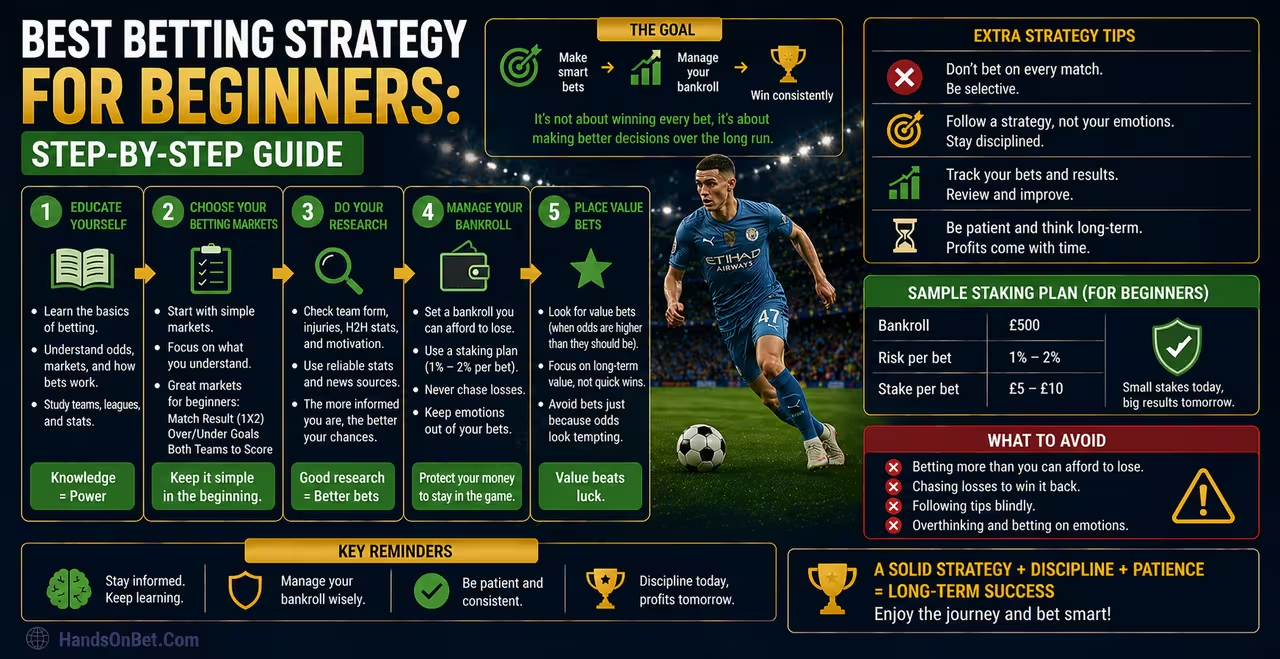
When people start betting, they often look for a system that guarantees wins. That is where most problems begin.
There is no strategy that wins every time. What you can build instead is a simple, structured approach that helps you make better decisions consistently.
A good beginner strategy is not about chasing big wins. It is about reducing mistakes, managing risk, and improving over time.
If you focus on process instead of results, your decisions become more consistent.
What Makes a Good Betting Strategy
A strong strategy does not need to be complex. In fact, the simpler it is, the easier it is to follow.
A good strategy is based on:
clear decision-making
consistent staking
basic match analysis
discipline
long-term thinking
The goal is to remove randomness and build a repeatable process.
Why Most Beginner Strategies Fail
Many beginners fail because they:
chase high odds
place too many bets
ignore analysis
change strategy after losses
bet emotionally
These habits lead to inconsistent results.
A good strategy avoids these mistakes.
Step 1: Focus on Markets You Understand
The first rule is to keep things simple.
Choose a few markets and stick to them.
Good beginner options include:
over 1.5 goals
both teams to score
double chance
These markets are easier to analyze and appear frequently.
Avoid complex markets like correct score or HT/FT in the beginning.
Step 2: Use Simple Match Analysis
Before placing any bet, understand the match.
Look at:
team form
scoring patterns
defensive strength
recent results
This helps you make informed decisions instead of guessing.
Step 3: Understand Odds Before Betting
Do not place bets just because something looks likely.
You need to understand the odds.
Ask:
do the odds reflect the true probability
is the potential return worth the risk
This is where concepts like value and expected value become important.
Step 4: Look for Value, Not Just Winners
A good strategy focuses on value, not just outcomes.
Instead of asking:
will this bet win
Ask:
is this bet worth taking
A bet can lose but still be a good decision if it had value.
Over time, this approach leads to better results.
Step 5: Use Small Stakes
Managing your money is essential.
A simple rule is:
bet 1 to 3 percent of your bankroll per bet
Example:
bankroll = 100
stake = 2
This protects you from losing everything during a bad run.
Step 6: Keep Bets Simple
Avoid overcomplicating your bets.
use single bets for consistency
use small accumulators (2 to 3 selections) if needed
Avoid large accumulators, as they reduce your chances of winning.
Step 7: Limit the Number of Bets
More bets do not mean more profit.
A good approach is:
focus on a few quality bets
avoid betting on every match
This improves decision quality.
Step 8: Stay Consistent
Consistency is what makes a strategy work.
use the same approach every time
avoid changing your system after losses
trust your process
This helps you build discipline.
Step 9: Control Your Emotions
Emotional betting leads to poor decisions.
Avoid:
chasing losses
increasing stakes suddenly
betting based on excitement
Every bet should follow your strategy, not your feelings.
Step 10: Track Your Results
Tracking your bets helps you improve.
Record:
the selection
the odds
the stake
the result
This helps you:
identify mistakes
improve your decisions
stay disciplined
Example Of A Simple Betting Strategy
Here is a basic system you can follow:
choose matches with strong goal potential
focus on over 1.5 or BTTS
use single bets
stake 2 percent of your bankroll
place 1 to 3 bets per day
This keeps your approach controlled and realistic.
Why This Strategy Works
This approach works because it focuses on:
simple markets
controlled risk
consistent decision-making
It avoids unnecessary complexity and reduces common mistakes.
What This Strategy Does Not Do
It is important to be realistic.
This strategy:
does not guarantee wins
does not avoid all losses
does not produce instant profit
It is designed for long-term improvement.
How This Strategy Connects To Other Concepts
This strategy works best when combined with:
expected value
match analysis
All these elements work together.
Common Mistakes Beginners Make
Avoid these mistakes:
betting without analysis
chasing high odds
using too many selections
ignoring bankroll management
changing strategy too often
These mistakes reduce consistency.
How To Improve Over Time
As you gain experience, you can:
refine your analysis
improve probability estimates
focus more on value
adjust your strategy gradually
Do not rush the process.
When To Move Beyond Beginner Strategy
You can expand your strategy when:
you understand basic markets
you manage your bankroll well
you stay consistent
Then you can explore more advanced markets and ideas.
Frequently Asked Questions
What is the best betting strategy for beginners
A simple strategy based on basic analysis, small stakes, and consistent decisions.
Should beginners use accumulators
Small accumulators are fine, but single bets are better for consistency.
How much should I bet per bet
A safe range is 1 to 3 percent of your bankroll.
Can a strategy guarantee profit
No. A strategy improves decision-making but does not guarantee wins.
How long does it take to see results
Results vary, but consistency over time is what matters.
Final Thoughts
The best betting strategy for beginners is simple, disciplined, and consistent.
Focus on:
understanding markets
analyzing matches
managing your bankroll
controlling your emotions
Avoid trying to do too much too quickly.
With patience and consistency, you can build a stronger and more structured approach over time.
0 Comments
Comments are reviewed before they appear.No comments yet. Be the first to add one.